Buying A Historic Home In Irvington: Key Considerations
May 21, 2026
May 21, 2026
Wondering whether that charming Irvington home is a dream buy or a future project list? If you are drawn to original woodwork, deep porches, and historic character, you are not alone. Buying an older home here can be incredibly rewarding, but it also calls for a more careful process. This guide will help you understand what to look for, what to verify, and how to plan with confidence before you move forward. Let’s dive in.
Irvington is not just an older neighborhood. It began as a planned suburban town in 1870, was annexed by Indianapolis in 1902, and its original core was listed on the National Register in 1987. Much of the neighborhood was later designated as a local historic district in 2006.
That history matters because it shapes what you may be buying. A state planning document reports that 78% of Irvington homes were built before 1960. In practical terms, that means age-related repairs, system updates, and preservation rules often play a big role in the buying process.
Irvington is also described as the largest locally protected historic district in Indianapolis and the largest National Register district in Marion County. For you as a buyer, that means the home’s location within the neighborhood can affect what changes may require formal review.
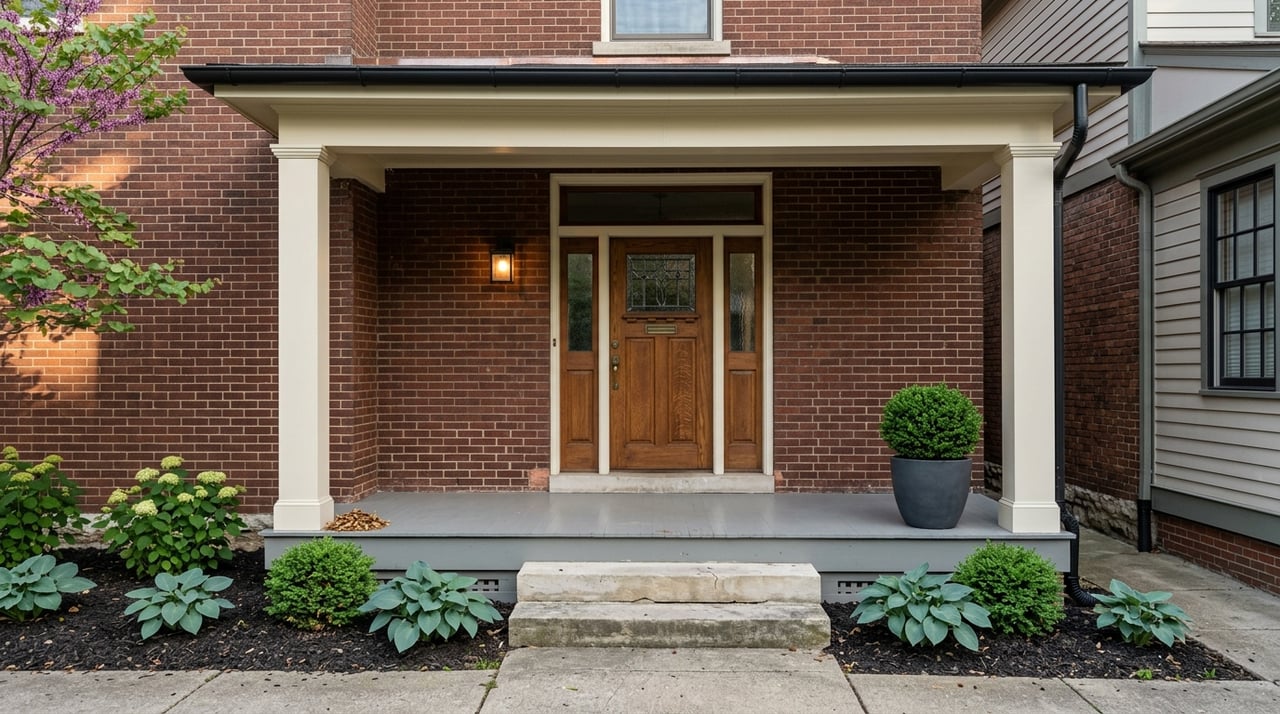
One of Irvington’s biggest draws is its variety of historic architecture. Because the neighborhood developed over several decades, the housing stock includes late-19th-century Second Empire and Italianate homes, along with 20th-century bungalows, American Four-Squares, and Tudor Revival cottages.
Early Irvington homes were often substantial Second Empire and Italianate buildings. Later development added more middle-class bungalows and Tudor Revival cottages, including many one-story examples near East 10th Street. That range gives buyers a lot of character to choose from, but it also means no two inspection paths are exactly the same.
If you are touring homes, a few design features can help you spot the style and understand the likely construction era:
These details are part of Irvington’s appeal, but they can also affect repair costs and renovation planning, especially when original exterior elements remain in place.
When you buy a historic home, finishes only tell part of the story. Older homes should be evaluated as systems, not just as surface-level updates. A house with beautiful trim and hardwood floors may still need major work in structural, electrical, plumbing, or HVAC areas.
HUD’s rehabilitation guidance recommends assessing the site, exterior, interior, structural components, electrical, plumbing, and HVAC systems in older residential buildings. That whole-house view is especially important in Irvington, where many homes were built during periods when indoor plumbing, electricity, and garages were not standard in average homes.
The key question is not just how old is the house? It is which systems have been updated, when, and by whom? A well-maintained older home can be a great purchase, but assumptions based on cosmetics alone can get expensive fast.
As you evaluate a property, it helps to ask:
A general home inspection is usually the starting point, not the finish line.
In a neighborhood with a large number of pre-1960 homes, specialty inspections can be just as important as the general inspection. These tests can give you a better sense of safety concerns, renovation limits, and future costs.
Because the older a home is, the more likely it is to contain lead-based paint, buyers of most pre-1978 homes should receive federal lead disclosure information before purchase. This is especially relevant in Irvington, where many homes were built long before 1978.
Lead risk is not limited to peeling paint. EPA notes that renovations that disturb painted surfaces in pre-1978 homes should be done by lead-safe certified renovators or firms. Friction surfaces such as windows and doors are a particular dust hazard, which is important in homes with original wood windows, trim, and doors.
Radon testing is another smart step. EPA recommends fixing homes at 4 pCi/L or above and considering mitigation between 2 and 4 pCi/L.
Indiana also says residents should test homes, and the state requires radon testers and mitigators in residential structures to be certified by the state. If the home has a basement or lower level, this test is often a worthwhile part of your due diligence.
Asbestos may be present in a variety of older residential materials. EPA lists common examples including flooring and mastic, roofing, vermiculite, plaster, transite siding, and window caulk or glazing.
If asbestos-containing material is intact, it is often best left undisturbed. But if your plans include remodeling, any work that could disturb these materials should be handled by trained and accredited professionals.
This is one of the biggest points buyers miss. Not every home associated with Irvington is subject to the same rules, and the difference matters if you are planning exterior updates.
If a property lies inside Irvington’s local historic district, the Indianapolis Historic Preservation Commission requires a Certificate of Appropriateness for renovation, new construction, demolition, and site work. The district also has its own preservation plan, and even relatively small exterior changes can trigger review.
By contrast, National Register districts that are not locally designated are not subject to Indianapolis Historic Preservation Commission requirements. That means you should verify the exact parcel designation before assuming your contractor can move forward on a standard timeline.
Depending on the property and proposed work, review may be required for:
If you are considering window changes, porch work, exterior materials, or additions, it is especially important to confirm the rules before finalizing your budget.
Historic-home purchases go more smoothly when you follow the right order. In Irvington, that usually means confirming what you are buying before you fall in love with a renovation idea.
A useful sequence is to confirm district status, get a general home inspection, add any needed specialty tests, and then price the likely renovation path before waiving contingencies or committing to cosmetic updates. That order helps you avoid costly surprises.
This process is often where local guidance matters most. A buyer’s agent can help coordinate the sequence and keep your decision grounded in facts rather than guesswork.
The best historic-home purchases usually happen when you appreciate both the beauty and the responsibility. Irvington homes can offer architectural details and personality that are hard to find in newer construction. At the same time, older materials, outdated systems, and district rules can shape your real budget and timeline.
If you go in with a clear plan, you are more likely to enjoy the charm without feeling blindsided later. The goal is not to avoid historic homes. It is to buy one with open eyes and a strategy that fits your comfort level.
Buying in Irvington can be incredibly rewarding when you understand the details before you commit. If you want help evaluating a home’s location, inspection findings, and renovation potential, connect with Sarah Fishburn for hands-on, local guidance.
Stay up to date on the latest real estate trends.
Whether you're buying, selling, or investing, we're here to guide you with expert advice, local knowledge, and a personal touch—every step of the way.