Carmel Starter Homes And Condos For First-Time Buyers
July 2, 2026
July 2, 2026
If you’re dreaming about buying your first home in Carmel, you’ve probably already noticed one thing: this market is not cheap. Carmel remains one of the more premium places to buy on the north side, which can make the first step into homeownership feel exciting and intimidating at the same time. The good news is that with the right expectations, a smart budget, and a clear plan, you can still find a path that fits. Let’s dive in.
Carmel is still a competitive market in 2026. Public market trackers show homes often receive multiple offers and can move quickly, with Redfin reporting about three offers on average and a median sale timeline of around 11 days.
Pricing depends on the source and the month, so it helps to think in ranges instead of one fixed number. Recent public snapshots put Carmel’s median sale or list pricing roughly between the low $500,000s and low $600,000s, which reinforces that this is a higher-priced entry point compared with some nearby suburbs.
The Carmel Housing Commission’s 2026 outlook gives helpful context for first-time buyers. The city estimates a sustainable monthly housing cost around $3,500, which translates to roughly a $450,000 to $550,000 purchase price with 20% down and interest rates in the 6.5% to 7% range.
That same report also shows why starter-home shoppers can feel squeezed. Homes priced under $300,000 made up only 7.1% of inventory, while homes above $600,000 accounted for 46.2%, so lower-priced options are simply harder to find.
Even with a higher price point, Carmel stays on many first-time buyers’ lists for practical reasons. You may be looking for a north-side location, an easier commute pattern, or a home that gives you long-term flexibility without moving too far from work or familiar routines.
For some buyers, the trade-off is worth it. You may pay more to get into Carmel, but you can also target property types that reduce upkeep and help you enter the market with a more manageable maintenance load.
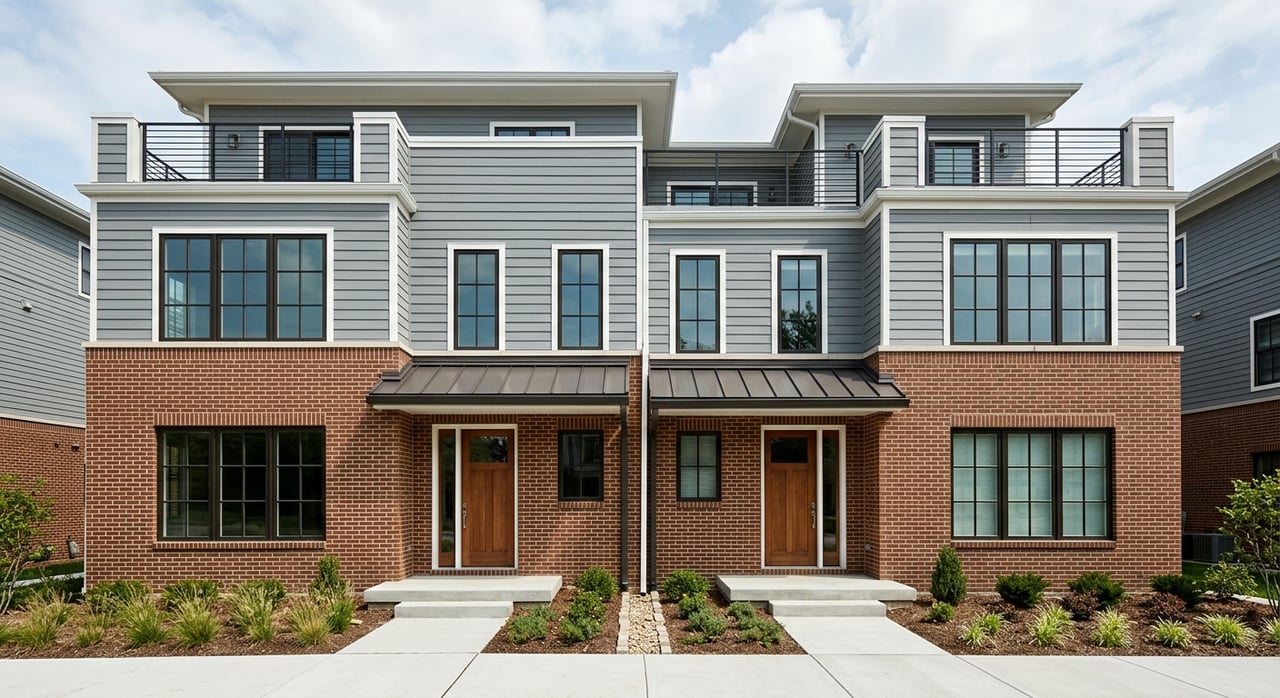
If you want the most realistic “starter” option in Carmel, townhomes currently stand out. Redfin shows 30 townhouses for sale in Carmel at a median listing price of about $427,000, with homes typically staying on the market around 31 days and receiving about two offers.
That matters because it places townhomes below the broader Carmel pricing discussed above. In a city where entry-level inventory is limited, townhomes can offer a more approachable price point without leaving Carmel altogether.
Current examples in public listings include three-bedroom, two-and-a-half-bath homes around 1,980 to 2,329 square feet priced from roughly $388,990 to $509,900. Features can include open-concept layouts, balconies, basements, and in some communities, shared amenities like pool access.
Townhomes can be a strong fit if you want:
That does not mean every townhome is a bargain. It does mean this segment appears to be one of the clearest places to begin your search if Carmel is your target.
A lot of first-time buyers assume condos will be the lowest-cost route. In Carmel, that is not always true.
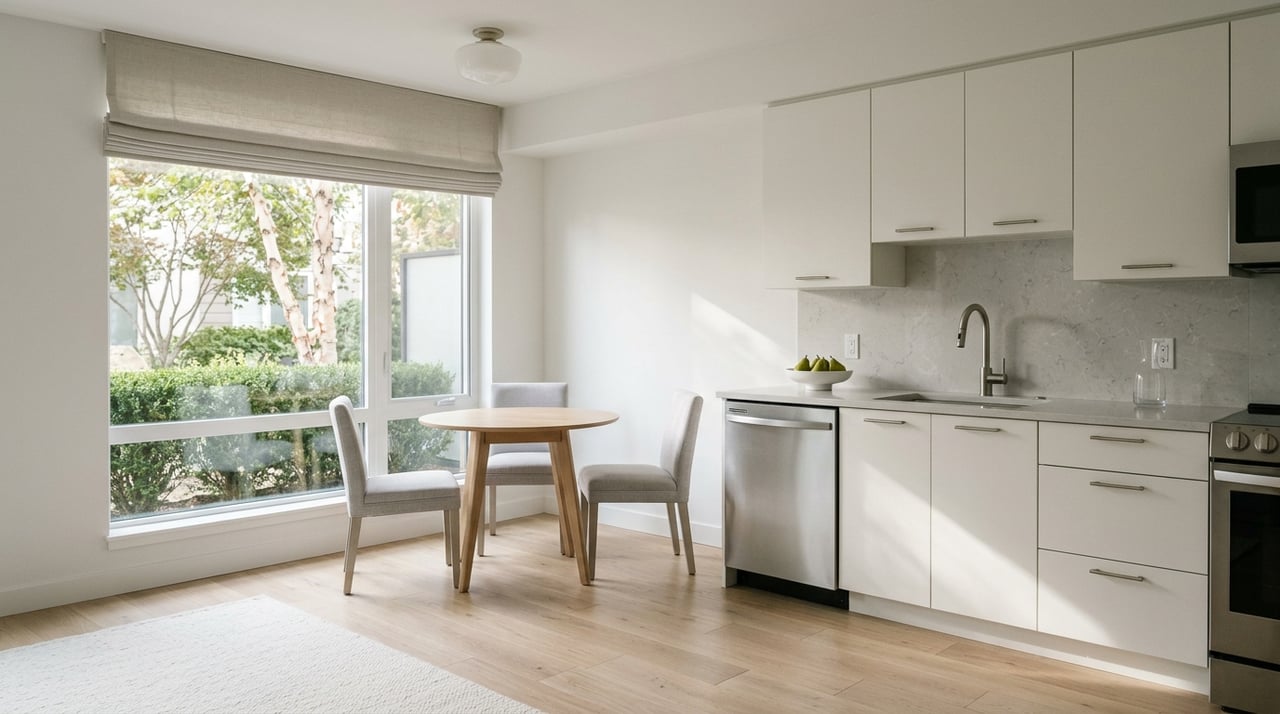
Redfin shows 70 condos for sale at a median listing price of $565,000. Condos also tend to sit longer, at about 81 days on market, and receive about one offer on average.
So while condos may offer convenience and lower day-to-day maintenance, they should not automatically be framed as the cheapest path into Carmel. Based on current market data, they often function more as a low-maintenance choice than a guaranteed low-price option.
A condo may still fit your goals if you value:
If your top priority is the lowest monthly cost, you will want to compare condo pricing and monthly association fees very carefully against townhomes and smaller single-family homes.
Lifestyle matters just as much as price when you buy your first home. Carmel’s overall Walk Score on Redfin is 19, which means the appeal of condos and townhomes here is generally less about dense urban walkability and more about maintenance, amenities, and access to suburban job centers and commuting patterns.
That is an important mindset shift if you are comparing Carmel with more urban neighborhoods in greater Indianapolis. In Carmel, the value often comes from convenience, layout, and community structure rather than a highly walkable, car-free lifestyle.
For first-time buyers, the listing price is only part of the story. What really matters is your full monthly housing cost.
That total can include:
HOA or condo fees can range from a few hundred dollars per month to more than $1,000, depending on the property and community. That means two homes with similar prices can create very different monthly budgets.
In Hamilton County, property taxes are paid in arrears and are due in two installments in May and November. The county auditor also applies state homestead and property-tax replacement credits when calculating tax bills.
Tax rates vary by district, so similar homes can still carry different tax costs. When you are comparing homes in Carmel, it is smart to look at the actual tax bill and not just the asking price.
If you are buying into a condo or homeowners association, the documents matter. Indiana law treats condominiums and homeowners associations as separate subjects under Title 32, which helps explain why rules, fees, and owner obligations can vary widely from one community to another.
That variation is important for first-time buyers. One community may feel very flexible, while another may have tighter rules around maintenance responsibilities, modifications, or governance.
When reviewing a condo or HOA community, pay close attention to:
You may have only a limited time to review condo documents after an offer is accepted, so it helps to know what you want to examine before you get to that stage.
Because Carmel prices can stretch first-time budgets, financing prep is especially important. Shopping multiple lenders and comparing Loan Estimates can be worthwhile, especially since condo loans or loans for other multi-unit properties may sometimes come with slightly higher costs.
Consumer guidance cited in the research report notes that comparing lenders can save about $600 to $1,200 per year. It also notes that closing costs typically run about 2% to 5% of the purchase price.
If your down payment is under 20%, you will usually need mortgage insurance. Some buyers may also qualify for low- or no-down-payment options, depending on the loan program.
State programs may help bridge the gap in a higher-cost market like Carmel. IHCDA reports that First Step offers qualifying first-time buyers 5% down payment assistance, while Next Home offers 2.5% or 3.5% down payment assistance.
Eligibility depends on factors such as income, credit, debt-to-income ratio, and purchase-price limits, and first-time-buyer or targeted-area rules may apply. For many buyers, this is one of the most important early conversations to have before starting a serious home search.
In Carmel, you should prepare for competition, especially on well-priced homes. Many homes receive multiple offers, and some buyers waive contingencies, according to public market reporting.
At the same time, townhomes and condos are currently moving more slowly than Carmel’s overall market. That can suggest a bit more negotiating room in some segments, though it is never a guarantee on any one property.
A practical strategy often looks like this:
This kind of preparation can help you compete without overextending yourself.
If you are still deciding where to buy, comparison shopping matters. Redfin’s recent listing snapshots show Carmel around $565,000, compared with about $439,900 in Fishers, $419,900 in Noblesville, $530,000 in Westfield, and $808,953 in Zionsville.
That makes Carmel a premium north-side option, but not the highest-priced one in the area. For many first-time buyers, the real question is whether Carmel’s location, housing style, and maintenance trade-offs feel worth the higher cost compared with nearby alternatives.
Carmel can still work for a first-time buyer, but it usually takes clear expectations and careful math. The market is competitive, entry-level inventory is limited, and condos are not always the bargain many buyers expect.
For most buyers, townhomes appear to be the most obvious starting point if you want to stay in Carmel. If you go in with a realistic budget, a sharp eye on monthly costs, and a strong financing plan, you can make a more confident decision about whether Carmel fits your first-home goals.
If you want help comparing Carmel townhomes, condos, and nearby alternatives on the north side, connect with Sarah Fishburn for hands-on, heart-forward guidance tailored to your budget and goals.
Stay up to date on the latest real estate trends.
Whether you're buying, selling, or investing, we're here to guide you with expert advice, local knowledge, and a personal touch—every step of the way.